Get past any defender with these soccer dribbling drills! Enhance your agility, footwork, and speed to beat anyone in your way.
The Benefits
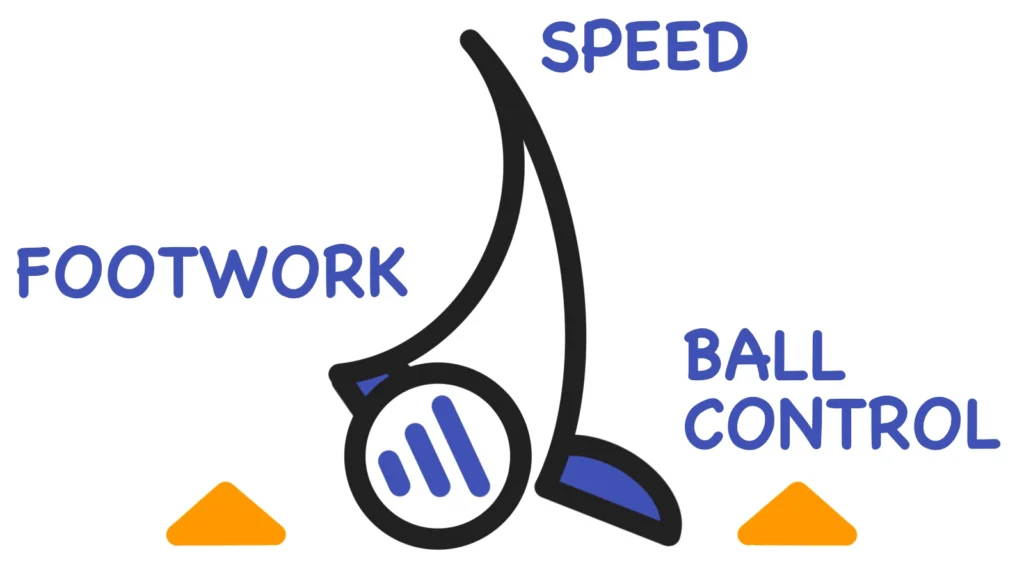
Soccer dribbling drills are great for improving ball control and getting around any defender. There will be both physical and mental benefits.
Physical Benefits
- Agility: Rapidly accelerate, decelerate, and change direction
- Ball Control: Stay in command and keep the ball close
- Endurance: Increase stamina with rapid ball movement
- Footwork: Boost ability to handle the ball with both feet
- Speed: Improve reaction time and cover more ground
Mental Benefits
- Awareness: Increase the knowledge of your surroundings
- Confidence: Boost ability to outmaneuver defenders
- Creativity: Increase ability to try new moves on the field
- Focus: Build concentration and technique to dribble under pressure
- Persistence: Gain patience to keep beating personal records
The Video
Soccer Dribbling Drills
The YouTube video from adidas shows you that learning how to dribble a soccer ball is all about using good technique. You can start the drills at a slow speed and then increase the speed as you improve.
Dribbling Techniques
- Foot placement on the ball is important.
- Use all parts of your foot, including the top, inside, outside, and bottom.
- When changing direction, use the inside or outside of your foot.
- When dribbling downfield with speed, use the top of your foot.
- When stopping the ball, use the sole or bottom of your foot.
Close Control Dribbling
- Tap the ball back and forth with the inside of your feet.
- Next, do multiple touches on the inside and outside of your feet.
- Do these drills for at least 30 seconds each.
- Set up some cones in a straight line on the ground.
- Dribble between the cones using the inside and outside of your feet.
Change of Direction
- Set up around 20 cones randomly scattered on the ground.
- Dribble around and don’t let the ball hit any of the cones.
- This helps you practice changing directions frequently.
- This helps you practice making inside and outside cuts.
- This helps you practice keeping the ball away from defenders.
Speed Dribbling
- Dribble in a straight line and touch the ball with the same foot at every step.
- Start at half speed and gradually speed up as you dribble.
- Make sure to touch the ball as much as possible.
- Make sure the ball does not get too far out in front of you.
- The goal is to gain speed while maintaining control of the ball.
Tips from ChatGPT
ChatGPT will tell you that learning how to dribble a soccer ball is all about having good balance and ball control.
Body Position
- Stay light on your feet.
- Bend your knees and lean forward slightly for balance.
- Use both feet to dribble.
- This makes you harder to defend.
- Use the top, inside, outside, and bottom of your feet to control ball direction.
Protect the Ball
- Change your dribbling speed, starting slow and then bursting forward.
- Use acceleration as a move to create space.
- Use quick cuts and changes of direction to throw off defenders.
- Keep your body between the defender and the ball in tight situations.
- Keep your head up to find dribbling lanes or passing opportunities.
Simple Drills
- Close Control Dribbling: Dribble the ball inside of your feet or between some cones. Use gentle touches so the ball stays close to you. If a defender can step between you and the ball, it is too far away.
- Change of Direction: Use cones randomly scattered around to act like defenders. Do not constantly look down at the ball the whole time. Glance down quickly, then look up to see the field.
- Speed Dribbling: Dribble in a straight line like you’re sprinting down the field. Use harder touches so the ball gets farther out in front of you. Gradually build up to dribbling and full speed.
Practice Tips
- Start dribbling slowly with precise accuracy and control.
- Then add speed as you improve. See how fast you can go.
- Practice dribbling every day, even for 10–15 minutes. Be consistent to gain ball control.
- Make it fun and set up obstacle courses with the cones.
- Don’t give up. The most important things for beginners are patience and persistence.